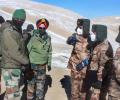
India and China on Tuesday agreed to hold the next round of the Senior Commanders meeting at an early date to achieve complete disengagement from all friction points in eastern Ladakh to create conditions for the restoration of normalcy in bilateral ties.
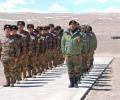
The talks till now have resulted in the resolution of issues in North and South Bank of Pangong Tso, Galwan and Gogra Hot Spring areas.

'My father's life sends a message that there are positive things happening between India and China, no matter what happens at the border.'
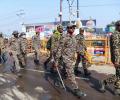
The Union Budget 2025-26 on Saturday allocated Rs 2,33,210.68 crore to the Ministry of Home Affairs with the majority of the fund -- Rs 1,60,391.06 crore -- being given to central police forces like Central Reserve Police Force (CRPF), Border Security Force (BSF) and Central Industrial Security Force (CISF) which are responsible for internal security, border guarding and security of vital installations.

Prime Minister Narendra Modi and Chinese President Xi Jinping are expected to hold bilateral meetings on the sidelines of the SCO summit in Tianjin, as both nations look to strengthen ties amid global trade tensions.
'Post the pandemic, when India is turning a new leaf in its economic policy with an eye on foreign capital and global supply chains that are likely to leave China, heightened tensions on the India-China border creates an atmosphere of uncertainty,' observes Virendra Kapoor.
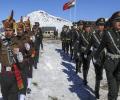
India and China on Thursday agreed to hold the next round of military talks at an early date to achieve the objective of complete disengagement in remaining friction points in eastern Ladakh.

India and China have implemented a pact on patrolling in Depsang and Demchok along the Line of Actual Control (LAC) in eastern Ladakh, as per agreed modalities and timelines. The agreement was reached on October 21 and includes provisions for disengagement and patrolling in the last two friction points in the region. The pact has been effected and implemented as agreed, with both sides resuming patrolling activities and grazing, where applicable, as per longstanding practice before the friction began. The terms of the disengagement agreements reached prior to the latest pact continue to hold in relevant areas in eastern Ladakh. The agreement applies mutually to both sides and is without prejudice to India's positions on the LAC or boundary lines. India and China are each carrying out one round of patrolling in Depsang and Demchok, but they have maintained their deployment of troops along the LAC. The focus now is on de-escalation of the overall situation. The agreement was endorsed by Prime Minister Narendra Modi and Chinese President Xi Jinping in a meeting in Kazan, Russia, signaling attempts to normalize ties.
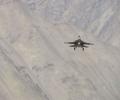
The entire base is seeing a flurry of activity and is playing a crucial role in enhancing the combat preparedness of the country along the China border.
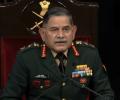
Army Chief General Upendra Dwivedi Monday said there is still a 'degree' of standoff between the Indian and Chinese militaries along the Line of Actual Control in eastern Ladakh and both sides need to sit down and firm up a broader understanding on how to calm down the situation.

On Monday China said it has "effectively managed and controlled" frictions in certain border areas.
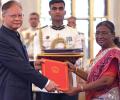
Praising the Indian students awarded at the function, he said the young generation is the hope of the two countries.

Qin, who is visiting New Delhi to attend the G20 Foreign Ministers meeting on Thursday, is expected to meet Jaishankar on its sidelines though the foreign ministry here is tight-lipped about it.

China on Tuesday confirmed that it has reached an agreement with India to end the standoff between the two armies in eastern Ladakh.

In Arunachal Pradesh, 10 people have killed in landslides and floods related incidents as incessant monsoon rains lashed the state.

The event was a fitting prelude to the resumption of border trade between the two neighbours.

Jaishankar said the last few years have been a "period of serious challenge", both for the relationship and for the prospects of Asia, noting that continuation of the current impasse will not benefit either India or China.

'India and China have the wise and sage leadership to steer this complex relationship in the coming decades.'

United States President Donald Trump has warned that countries aligning with the BRICS economic bloc will face additional 10 per cent tariffs on their goods, as he seeks to protect the dollar's global dominance.
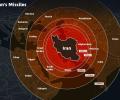
The Israel Defence Forces (IDF) on Saturday issued a new graphic showing Kashmir as Indian territory, rectifying their previous mistake.

The talks will focus on 'delimitation of the border, boundary management and a host of bilateral and international issues'.

Prime Minister Narendra Modi is expected to visit Japan and China starting around August 29. The visit to China would be his first after the Ladakh border standoff.

As soon as the Question Hour ended, Congress' Leader of the House Adhir Ranjan Chowdhury demanded that a discussion on the 'Indo-China border situation be held', saying late Prime Minister Pandit Jawaharlal Nehru had allowed a discussion in Lok Sabha on the India-China war in 1962.

After India firmly told China that its violation of the border pacts has "eroded" the entire basis of bilateral ties, China's defence ministry on Friday said the situation at the border is "generally stable" and both sides should put the boundary issue in an "appropriate position" and promote its transition to "normalised management".
'The logic every one of our neighbours must realise is that working with India will give you benefits, and not working with India has a cost.'
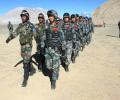
The two countries reviewed the situation in the region during a fresh round of online diplomatic talks under the framework of the Working Mechanism for Consultation and Coordination (WMCC) on border affairs.
China welcomes Prime Minister Narendra Modi's planned visit to the Tianjin Summit of the Shanghai Cooperation Organisation (SCO), expressing hope that the event will be a 'gathering of solidarity, friendship and fruitful results'.

While a giant, it's a nimble-footed one, and is growing at a speed that even some of its private sector peers find enviable.
Between FY18 and FY24, it doubled its balance sheet. Despite being a late entrant in some segments, it has been able to grab market share, observes Tamal Bandyopadhyay.
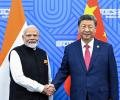
The Galwan clash occurred six months after the Doklam disengagement and two high-profile meetings. India should not be caught by surprise once again, asserts former foreign secretary Shyam Saran.
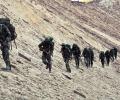
The report said that Indian officials believe China is trying to contain India by forcing it to divert more resources into defending simultaneously both its western border with Pakistan and eastern flank with China and by weakening its willingness and ability to challenge Chinese ambitions to dominate the region.
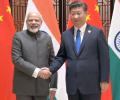
The Chinese and the Indian troops were engaged in a standoff for 73 days in Doklam.
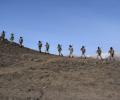
Asked about the reports of the troops on both sides disengaging and moving back to their previous positions, Chinese foreign ministry spokesperson Hua Chunying told a media briefing in Beijing that both sides are taking steps to ease the situation along the borders.
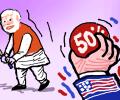
'Things may get much worse before they get better,' predicts Ajay Chhibber.

India and China on Thursday vowed to redouble efforts to resolve the remaining issues in eastern Ladakh at the earliest and 'stabilise and rebuild' ties even as External Affairs Minister S Jaishankar conveyed to his Chinese counterpart Wang Yi during a meeting that the Line of Actual Control (LAC) must be respected.

Xi commended the battalion members for their remarkable efforts in guarding China's border region, noting that they have dedicated their youth to securing the country's territorial integrity and have accomplished their missions well, state-run Xinhua news agency reported.
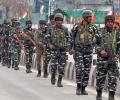
When the internal security situation spirals out of the control of the provincial law and order machinery, the CAPFs can be called in, providing a security buffer before the Army is deployed.

The talks came a day after the two armies began a limited disengagement in a few areas in Galwan Valley and Hot Spring in a demonstration of their intent to end the row peacefully.

The BRICS nations condemned the Pahalgam terror attack, advocated for a zero-tolerance approach to terrorism, and criticized rising tariffs during their summit in Rio de Janeiro. They also addressed global challenges and called for reforms in international institutions.
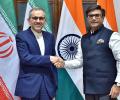
India's Foreign Secretary Vikram Misri will travel to Beijing for a two-day trip beginning Sunday, marking the second high-profile visit from India to China in less than one-and-a-half months. The visit comes amidst ongoing border tensions and follows a recent disengagement pact between the two countries in eastern Ladakh. The Foreign Secretary-Vice Minister mechanism meeting will focus on the next steps for India-China relations, including in the political, economic, and people-to-people domains. The decision to revive this bilateral mechanism was taken at a meeting between Prime Minister Narendra Modi and Chinese President Xi Jinping in Kazan in October.

The ministry of external affairs on Wednesday said the talks were held in an "open and constructive manner" for an early and mutually acceptable resolution of the remaining issues.
